Overview
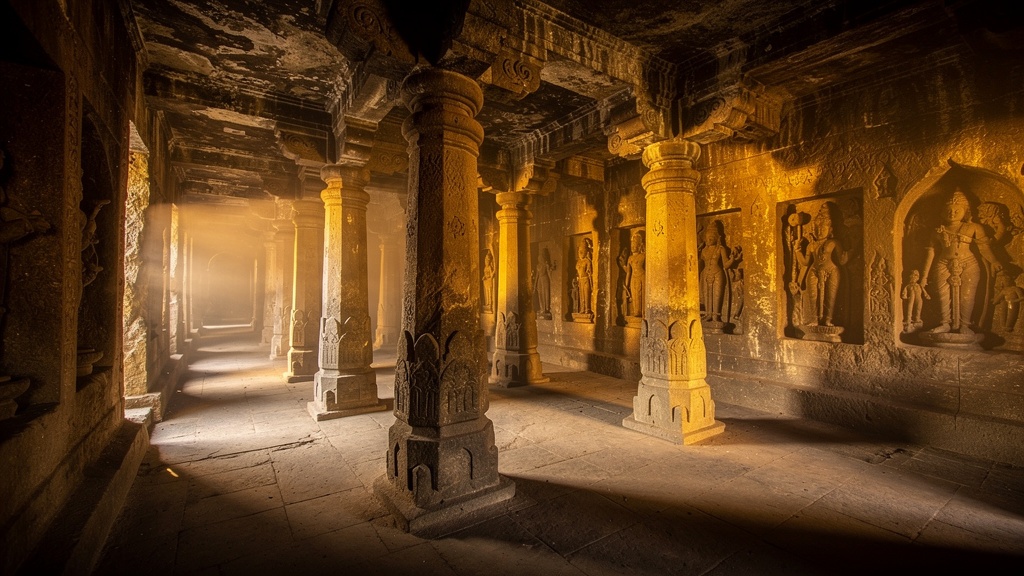
The Jogeshwari Caves are among the earliest and largest Hindu rock-cut cave temples in India, dating back to the mid-6th century Kalachuri period. Carved out of a single basalt rock, these caves are dedicated to Lord Shiva and represent the early Pashupata Shaivism tradition.
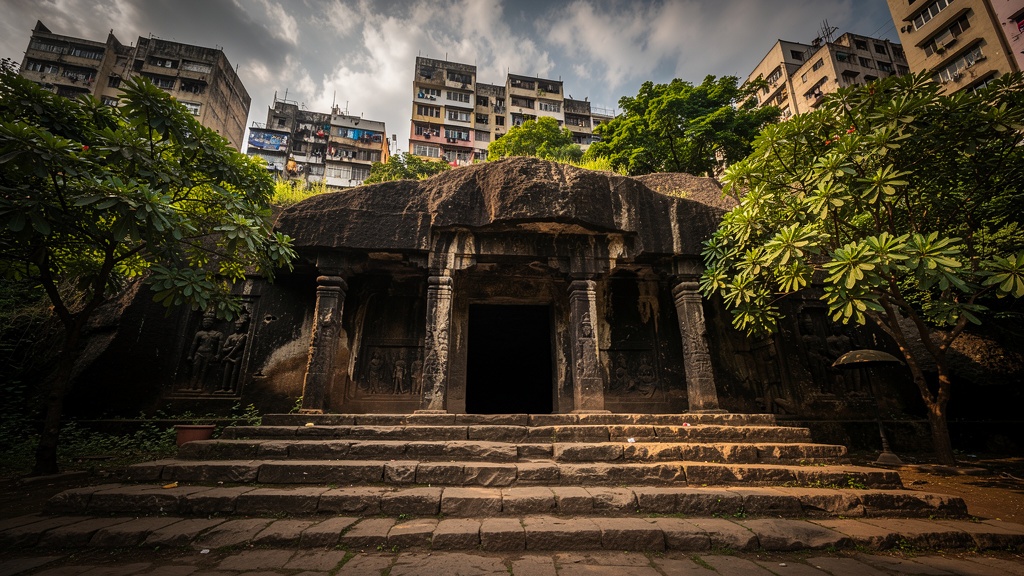
What makes Jogeshwari Caves extraordinary is their location — they sit right in the heart of a dense Mumbai suburb, surrounded by residential buildings, busy streets, and markets. This juxtaposition of ancient spirituality and modern urban chaos is the defining experience of visiting these caves.
History & Significance
The Jogeshwari Caves were excavated during the Kalachuri period (mid-6th century CE), making them approximately 1,500 years old. They are considered one of the earliest Hindu cave temples in the Indian subcontinent, predating the more famous Elephanta Caves.
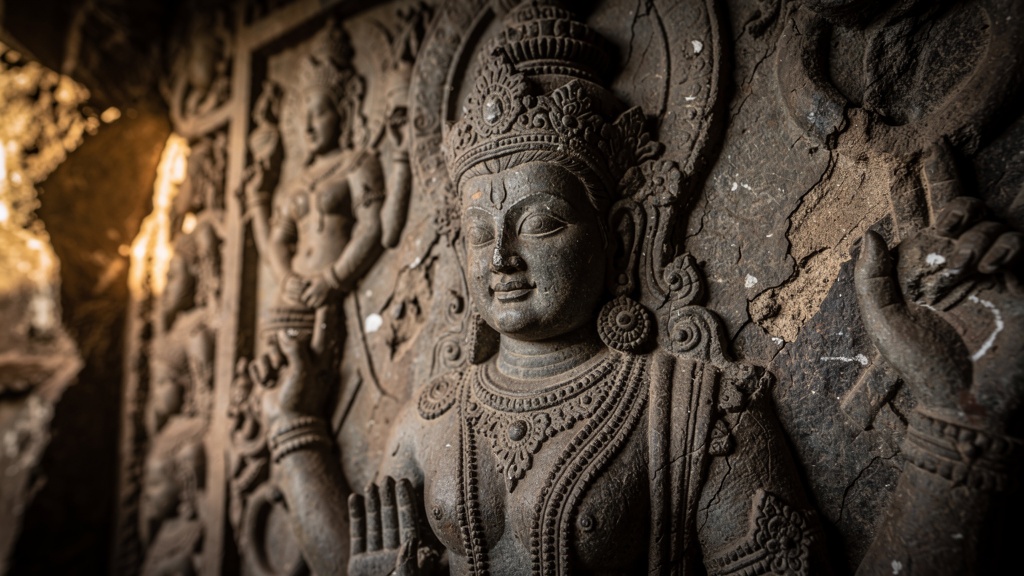
The caves are associated with the Pashupata Shaivism tradition, one of the oldest sects of Shaivism. The main shrine contains a Shiva linga, and the walls feature intricate carvings of Hindu deities, including depictions of Shiva, Parvati, Ganesha, and other mythological figures.
Despite encroachments, neglect, and the passage of centuries, the caves remain a living temple — daily worship continues, and the site comes alive during festivals like Maha Shivaratri.
📜 Did You Know?
The Jogeshwari Caves share architectural similarities with the Elephanta Caves and are believed to have influenced later rock-cut traditions in western India. The main hall (mandapa) measures roughly 30 metres square, supported by massive stone pillars.
Architecture & Highlights
- Main Mandapa: A spacious pillared hall with 20 massive square columns, each carved with intricate floral and geometric patterns.
- Garbhagriha (Sanctum): The inner shrine houses a Shiva linga and is the focal point of active worship.
- Carved Panels: The walls feature detailed reliefs depicting scenes from Hindu mythology, including Shiva as Nataraja and Ardhanarishvara.
- Side Shrines: Smaller cells and shrines branch off from the main hall, some containing additional sculptures.
- Water Cisterns: Ancient rainwater harvesting systems can still be seen within the complex.
- Damaged Sculptures: Some sculptures show signs of damage from centuries of weathering and human activity — a reminder of the site's ongoing conservation challenges.
Visitor Information
| Detail | Information |
|---|---|
| Timings | Daily: 7:00 AM – 7:00 PM (approx.) |
| Entry Fee | Free (a nominal fee may apply for photography; verify on-site) |
| Best Time | October to March (early mornings recommended) |
| Time Required | 45 minutes to 1.5 hours |
| Photography | Allowed. Best light in early morning and late afternoon. |
| Accessibility | Long flights of stairs. Not wheelchair accessible. |
⚠️ Important Notes
- Entry fee information is inconsistent across sources — carry small cash and verify on arrival.
- The caves are a living temple. Dress modestly and remove footwear before entering the sanctum.
- Monsoon months (June–September) make the stone steps extremely slippery. Visit with caution.
- The surrounding area can feel chaotic. Plan daytime visits and keep valuables secure.
Photography Tips
The caves offer excellent opportunities for photography, especially for heritage and architectural shots. The contrast between ancient stone and modern urban life visible from the entrance is a powerful composition.
Early morning (7:00 AM – 9:00 AM) provides the best natural light filtering into the cave chambers. A wide-angle lens is recommended for capturing the scale of the pillared hall. Tripods may require permission.
How to Get There
The Jogeshwari Caves are located near Jogeshwari Station (West). From the station, it is a 10–15 minute walk or a short auto-rickshaw ride. The nearest Metro station is Jogeshwari East on Line 7.
Read the full transport guide →
Frequently Asked Questions
Yes, during daytime hours (especially mornings), the caves are generally safe for solo travellers. The site sees a steady flow of devotees and visitors. However, as with any urban location, stay aware of your belongings and avoid visiting after dark.
You can, but exercise extreme caution. The stone steps leading into the caves become very slippery when wet. The surrounding area also gets muddy. If you do visit during monsoon, wear sturdy, non-slip footwear.
Parking is extremely limited due to the dense urban setting. It is strongly recommended to use public transport (train, metro, or auto-rickshaw) rather than driving.
There are usually no official guides stationed at the caves. It's best to read up on the history beforehand or hire a private guide from Mumbai who specialises in heritage walks.